

End-of-line palletizing might look like the last job on the line, but it’s one of the most critical steps in the whole process. If this part isn’t dialed in, no matter how efficient the rest of your line is; you’ll hit a bottleneck, burn labor, and lose time.
Case palletizing keeps products moving, cuts waste, and helps your team work smarter. The best palletizing solutions help you hit throughput targets, lower injury risk, and adapt when demand shifts. Especially when you’re dealing with labor shortages or rising costs, having the right setup here can make the difference between surviving and scaling.
Let’s look at 16 practical ways to get more from your palletizing system, whether you’re working with a manual setup or a robot cell.
What Is End-Of-Line Palletizing, and Why Does It Matter Today?
End-of-line palletizing is stacking finished goods onto a pallet so they’re ready to ship. It sounds simple, but it’s one of the most important links between production and delivery.
Good case palletizing keeps loads stable, protects your product, and uses pallet space wisely. When it runs smoothly, your whole line flows better. When it doesn’t, everything backs up. Whether you’re in food, cosmetics, or plastics, this step plays a key role in how reliably you can move product out the door.
How Can A Robot Case Palletizer Improve Throughput and Consistency?

If your line is growing (or your labor pool isn’t), robot palletizing might be the smartest upgrade you can make. It’s all about keeping pace without compromising quality or safety.
Tip 1: Use a robot palletizer to handle high volumes and reduce labor.
A robot palletizer uses a type of articulated industrial robotic arm to move cases or full layers with speed and precision. It runs all day without fatigue and doesn’t call in sick. Most can handle between 600 and 1,600 boxes per hour, far beyond what manual palletizing can manage. That means fewer bottlenecks and a more predictable output.
Tip 2: Program for multi-SKU handling to improve versatility.
Automated case palletizers aren’t just fast, they’re flexible too. With the right end-of-arm tooling, they can grip boxes, bags, drums, or pails. And they’re smart enough to switch between SKUs without slowing down. If your product mix changes often, that adaptability is a big win.
Tip 3: Choose an auto palletizer for repeatable, high-speed operations.
Auto palletizers are built for throughput. They’re fast, reliable, and excellent at doing the same thing over and over, so they’re perfect for cases, bottles, or bags that don’t change much. Some systems can push 150 cases per minute and stay locked in with your upstream machines, keeping the line balanced and efficient.
That said, robot palletizers are catching up fast. If your operation needs both speed and flexibility, it might be time to compare the two side by side.
Related Reading: The Small Business Guide to Affordable Packaging and Palletizing Robots
What Are the Most Important Case Palletizing Tips for Safe and Efficient Stacking?
Good stacking isn’t just about speed (although that’s a critical factor). It’s also about safety, space, and load stability. These case palletizing tips cover the basics every operation should follow.
Tip 4: Use precise pallet configuration for stability and optimal space.
Getting the pallet configuration right is crucial for load safety and efficiency. Automated case palletizing systems excel at building precise, uniform structures, ensuring stability and maximizing space use for shipment. Of course, the load must be tightly secured using straps or film. Automated systems ensure the wrap extends all the way down, overlapping the pallet itself, and apply consistent tension to compress and secure the load without damaging the goods.
Tip 5: Avoid overhangs and eliminate empty space.
Case palletizing systems precisely manage stack footprint and height, keeping loads securely within the pallet’s edges and preventing overhangs, which increases the risk of damage and instability. They also excel at minimizing gaps between boxes, using fillers if necessary, to prevent shifting in transit and optimize space utilization. You get consistently stable loads for safer handling and transport.
Which Palletizing System Suits Your Current Throughput and Future Needs?

There’s no one-size-fits-all here. The right palletizing system depends on what you’re running today and where you’re headed next.
Tip 6: Evaluate needs based on product mix, throughput, and scalability.
Start by looking at the basics. What are you palletizing? How fast does it need to move? And how likely is that to change? A conventional system might make sense if you’re pushing one SKU at high volume. But if you’re dealing with mixed products, short runs, or changing orders, a custom robotic palletizing system gives you more room to adapt.
Don’t just chase speed or the lowest bid. Think about long-term value, how the system handles your products, fits your space, and scales with your business. Our free Automation Assessment Questionnaire is designed to quickly pinpoint your specific opportunities and provide immediate clarity on where automation can make the biggest impact for you.
Related Reading: Boosting Factory Productivity with the Power of Human-in-the-Loop Automation
How Do Robot Palletizing Systems Handle Product Variation?
Most lines today aren’t just moving one box size or shape. That’s where robot palletizing systems really earn their keep.
Tip 7: Use vision systems and specialized EOAT to manage diverse products.
Robots can do what fixed machines can’t: adapt. With the right end-of-arm tooling (vacuum cups, clamps, fingers), a robot case palletizer can grip everything from cartons to drums. Add in a vision system, and it can identify what’s coming down the line and stack it accordingly, even when order profiles change by the hour.
Do you need to handle fragile or odd-shaped items? Use cushioning materials like foam or plan ahead with 3D simulations. Stick to the basics: heavier items on the bottom, lighter ones up top. That’s true whether you’re stacking bricks or bags of chips.
Robot palletizing systems aren’t just automated, they’re smart too. And when you’re running mixed loads, that flexibility pays off.
What Are The Most Overlooked Palletizing Best Practices?
Sometimes it’s not about adding more tech, but about tightening the basics. These small steps keep your palletizing system running smoothly and safely.
Tip 8: Automate packaging to optimize space.
Switching to uniform packaging and materials streamlines your operations for automation. Standard box sizes allow robots to build clean, stable loads faster and more precisely, minimizing errors and maximizing pallet space.
Tip 9: Implement routine maintenance and KPI tracking for sustained performance.
Every case palletizing system, manual, auto, or robotic, needs upkeep. Skipping maintenance is a fast track to breakdowns and delays. Build a schedule. Check wear points. Keep things clean. Then track how you’re doing. KPIs like Pallet Load Time or Damage Rate can show you what’s slipping and where to focus. Real-time data makes these systems smarter. Use it.
Related Reading: Your Machines Are Talking. Are You Listening with Real-Time Machine Data?
How Do Smart Palletizing Solutions Increase ROI?
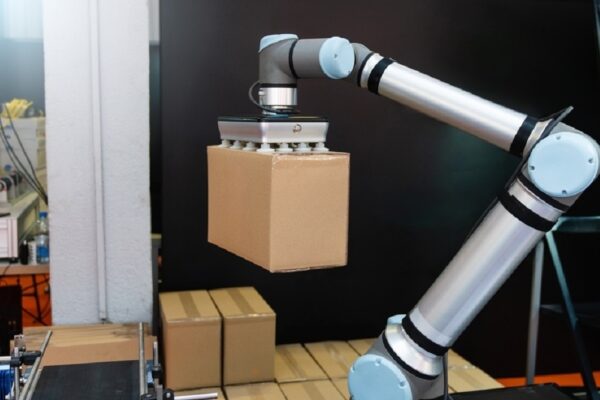
Good case palletizing solutions make your whole operation tighter, safer, and more cost-effective.
Tip 10: Reduce damage, optimize floor space, and reallocate labor.
When a robot handles the heavy lifting, your people can focus on higher-value work. That alone cuts labor costs and helps with retention. But there’s more to it.
Automated systems build consistent loads every time. That means fewer damaged goods, fewer claims, and fewer headaches downstream. Plus, they stack smart, using full pallet height and a smaller footprint, meaning you get more out of your floor space.
Add it all up and you’ve got better use of labor and space, and fewer damaged shipments. That’s where ROI really comes from.
Related Reading: How to Calculate ROI for Automation Projects: A Comprehensive Guide
Is An Auto Palletizer Worth the Investment?
That’s one of the first questions we get. It’s a serious investment, and you must be sure it’s the right move for your floor.
Tip 11: Don’t just look at the sticker price of an auto palletizer.
Upfront cost doesn’t tell the whole story. A conventional system might seem cheaper, but it often burns more energy, takes up more space, and costs more to run. A robot palletizer typically lowers energy use and conveyor needs, driving down Total Cost of Ownership (TCO).
The real value? Fewer errors, less waste, and a more reliable operation that pays you back year after year.
Related Reading: From Bottlenecks to Breakthroughs: How Flexible Manufacturing Systems Deliver ROI
Why Does Good Pallet Configuration Matter for Safety?
A good load isn’t just about fitting more product. It’s about getting it to where it’s going in one piece. This is one of the most important palletizing tips we share with clients.
Tip 12: Build the load, don’t just stack it.
A poorly stacked pallet is a liability. It can fall apart in transit, damaging products or, even worse, creating a safety hazard.
This is where pallet optimization comes in. You need to plan your stacking. Think of it like building a brick wall. You use specific patterns to create a stable, solid structure.
An auto palletizing system is perfect for this. It builds each layer with precision, ensuring every box is exactly where it needs to be. The result is a rock-solid load.
What Are the Real Risks of Manual Palletizing?

Lifting, bending, twisting… Doing that all day, every day, takes a toll. We’ve seen it firsthand, and we bet you have too.
Tip 13: Less manual work means safer teams and better hiring.
Manual palletizing takes a real toll on workers. It’s repetitive and physically intense, and it’s one of the top causes of strains, sprains, and chronic injuries. Those injuries lead to downtime, higher insurance costs, and lost productivity. And with labor shortages, it’s getting harder to find anyone willing to take on that kind of work.
That’s where automation makes a real difference. A robot palletizer handles the heavy lifting, so your team can focus on safer, higher-value tasks. It helps reduce injuries, improve retention, and keep operations running smoothly, making it one of the most worker-friendly workspace upgrades you can make.
Related Reading: A Step-by-Step Guide to Automating Case Erecting, Packaging, Labeling, and Palletizing
How Does Smart Pallet Configuration Make Your Warehouse Run Better?
Getting product stacked right on the pallet isn’t just about looks. It’s about protecting what you ship and making the most of your space.
Tip 14: Let automated systems build perfect layers.
A well-built pallet means your products arrive safely. It also means you’re not wasting space in your warehouse or on your trucks. Automated palletizing systems are masters at this. They use pre-programmed patterns to build each layer perfectly. They know exactly how to interlock boxes so the load is solid. This kind of precise layer building, or pallet optimization, means no wasted space, no leaning stacks, and maximum product per pallet. It’s an efficiency you can count on, every time.
Tip 15: Smart software knows the best stack.
Pallets are rarely one-size-fits-all anymore. Orders change, product sizes vary. How do you keep stacking efficiently?
Modern palletizing solutions use powerful software. Think of it as a super-smart brain figuring out the best way to stack. The software takes all your box sizes and order mixes and quickly calculates the absolute best pallet configuration. It can handle thousands of possibilities to give you a stable, dense load.
This kind of pallet optimization means you fit more product onto each pallet and each truck, saving you money on shipping and storage. It ensures you’re always getting the most out of your loads, even when things are constantly changing.
Can Cobot Palletizing Bridge the Gap for Smaller Facilities?
Many people assume automation, especially something like a robot palletizer, is only for massive factories. They think you need tons of space and a huge budget to bring in an auto palletizer. But that’s not the whole story anymore. New palletizing solutions are making it possible for smaller operations to reap the benefits, too.
Tip 16: Use collaborative robots to automate mid-volume palletizing.
Cobot palletizing is a great entry point for smaller operations or lines requiring more flexibility. These collaborative robots (cobots) are designed to work safely alongside human workers and can be easily reconfigured for different packaging sizes and setups. A cobot palletizing solution can fit perfectly in limited end-of-line spaces while still increasing throughput. It gives you the best of both worlds: robotic efficiency with human flexibility.
Related Reading: Mastering Automation Timelines (A Realistic Guide for Manufacturers)
The Modular Robot System (MRS) as a Shortcut to Automation
The Modular Robot System (MRS) is a reconfigurable, mobile robotic platform designed to boost your automation processes. It’s a turnkey modular system that simplifies complex automation tasks, making robotics accessible to a broader range of manufacturers.
The MRS offers versatile modular robotic solutions for manufacturers of all sizes and can be used to build advanced robot palletizer and cobot palletizer systems. It’s a portable robot cell designed for rapid redeployment across a range of end-of-line applications.
Key Features for Flexible Automation
The Modular Robot System is engineered for rapid deployment and adaptability, offering key features such as:
- Robot Compatibility: It works with a range of robotic arms from leading manufacturers, such as Fanuc, Dobot, UR, and Doosan.
- User-Friendly Control: Intuitive MRS software programming for simplified operation and task customization.
- Modular Expandability: Configurable modular robotic design allows for easy integration of additional accessories and peripherals.
- Mobility: Locking/lifting casters allow for easy movement and redeployment across your facility.
Your Path to an Automated Future Starts Now
Are you ready to gain your competitive edge, improve your bottom line, and build a strong future? This guide has shown you what’s possible. Now it’s time to take action and turn your palletizing solutions into a powerful tool for growth.
Discover Your Automation Potential
Take our quick, free Automation Assessment Questionnaire. This 2-minute survey digs into your unique operational needs, setting the stage for custom-fit automation solutions. Get immediate clarity on where to focus your efforts for the biggest impact and best efficiency.
Equip Yourself with Knowledge
Download our free eBook, Automate to Elevate: Your Automation Assessment Guide. This complete guide helps you master your own DIY assessment process and get access to the tools that will transform your operations. Discover proven strategies and expert insights designed to help you revolutionize your manufacturing processes.
Connect with an Expert
Ready to take the next step? Book a free consultation. Connect directly with a robot palletizer expert who can give you a full picture. We’ll look into your challenges and deliver tailored insights to create a clear, actionable roadmap for your business.