

Things are changing in electronics manufacturing. For years, sending work overseas was the standard, mostly because the labor seemed cheaper. But now, we’re seeing why that approach has its limits. Global unrest, big disruptions that exposed how fragile our supply chains can be, and rising costs for offshore work are all making businesses rethink where they build. And for us, one of the biggest concerns is always the constant threat to your valuable intellectual property (IP).
But we’re seeing a shift, as electronics manufacturers are bringing the assembly of printed circuit boards back home to the United States. We’ll talk about why this move is critical, not just for protecting your IP but for making your supply chain truly resilient.
For marketing-driven companies, this means a reliable partner like DEVELOP LLC can handle the complex product creation behind the scenes, freeing you to focus on market strategy and sales. It’s about building smarter, building here.
Why Domestic PCB Assembly Matters More Than Ever
Deciding where to build your electronic parts, especially your PCBs, used to be a simple math problem: find the cheapest spot. That’s changing fast. The old way of offshoring is now running up against real global risks and a new economic reality. Because of this, bringing PCB assembly back to the United States is becoming a clear, strategic choice for companies that prioritize security, resilience, and long-term value. It’s not just about cost anymore. It’s about smarter electronics manufacturing.
Why We’re Building PCB Assembly Back Home
For a long time, the thinking was simple. Send electronics manufacturing offshore. It was about chasing the lowest cost, especially for printed circuit boards. Even for our newest designs, that’s where the work went. But things have changed. The real costs of going overseas have gone up, and the risks, especially to your valuable IP, are too high to ignore. That’s why we’re seeing a real push to bring this work back to America.
A few big things are driving this shift:
- Global Shakes: The world feels less stable. Trade disagreements and conflicts overseas make global supply chains unreliable. When things get shaky, bringing production closer to home just makes sense. It’s about having a more predictable environment for your business.
- Supply Chain Weaknesses Exposed: The pandemic was a wake-up call for everyone. Long, complicated international supply chains broke down. Factories shut, ports jammed, and shipping costs skyrocketed. We learned that focusing only on the cheapest option often meant we weren’t ready for disruption. We need stronger, shorter supply lines.
- IP at Risk Offshore: Protecting your your IP is critical. When your designs are manufactured overseas, there’s a big risk of theft, counterfeiting, and copies. It’s tough to fight that in other legal systems. Keeping that sensitive manufacturing here, where our laws protect your designs, is just smarter.
- The Real Cost of Doing Business Overseas: We used to only look at the per-unit price when offshoring. But that’s not the whole story. Now, we’re looking at the Total Cost of Ownership (TCO). That includes things like overseas labor costs, shipping fees, tariffs, and even the cost of fixing quality issues. When you add all those hidden costs up, the cheaper overseas option often isn’t so cheap anymore.
- Government Support: Our government understands how important this is. They’ve passed laws like the CHIPS and Science Act and the Inflation Reduction Act. These programs offer serious funding, grants, and tax breaks to build up our domestic semiconductor and PCB manufacturing capabilities.
All these factors tell us one thing. Companies aren’t just chasing the lowest labor costs anymore. They’re looking for a balanced approach that puts supply chain security, IP protection, quality, and stable operations first. It’s about building things right, here at home.
Related Reading: Why Reshore Your Manufacturing in America
What the Numbers Say About US PCB Assembly
The global PCB assembly market is big and still growing. We’re talking about a market that’s estimated at nearly $68.75 billion this year, heading towards $86.5 billion by 2034.
Now, the truth is, US-based PCB assembly services used to result in a lot more printed circuit boards. Twenty-five years ago, we made about 30% of the world’s supply. Today, that’s dropped to 4-5%. That shift happened because a lot of high-volume work went overseas to cut costs. But we’re seeing signs that this trend is changing.
The move to bring manufacturing back home is gaining real traction. CEOs and COOs are making plans to localize their supply chains, and more companies are looking to move operations out of places like China. This isn’t just talk. Reshoring added over 260,000 jobs in the US in 2021, and the number is growing.
Building Quality In With Our Approach to PCBA Inspection and Testing
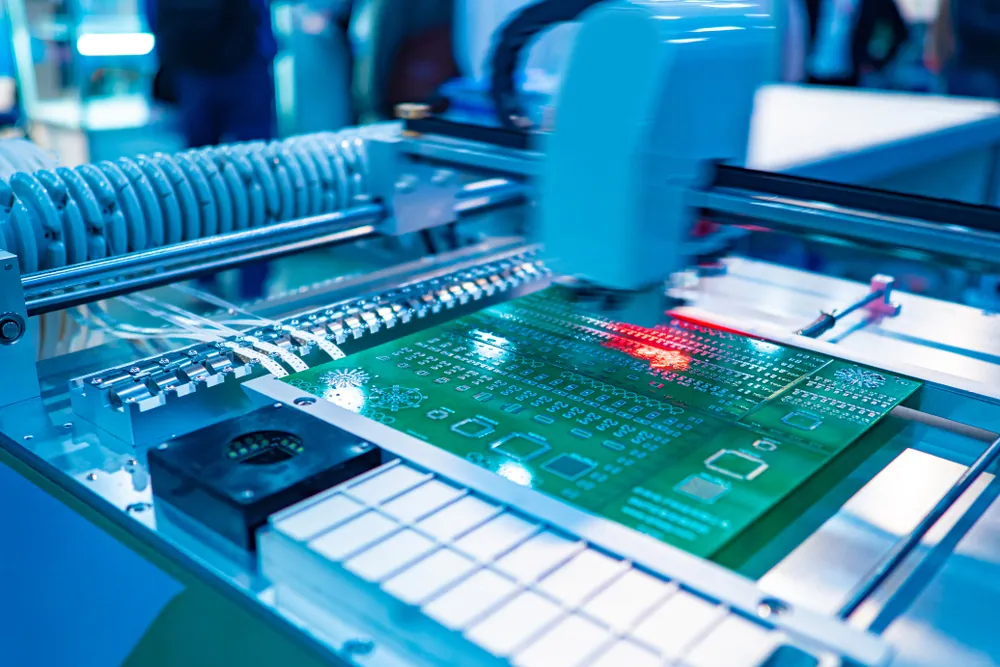
Building a great printed circuit board assembly requires sharp focus on quality, right from the start. Inspection and testing aren’t just afterthoughts for us; they’re built into every step. At DEVELOP LLC, we use advanced automation to make these crucial phases even more precise and reliable, reinforcing our commitment to domestic PCB manufacturing excellence.
Here’s how we ensure quality throughout the PCBA process:
- Design for Assembly (DFA): Before we even start building, our engineers dig deep into your designs and Bill of Materials. We’re looking to catch any potential issues early that could cause problems during manufacturing. This upfront work prevents headaches and keeps costs down, especially with complex, modern PCBs that pack a lot of components for US-based PCB assembly services.
- Solder and SMT Precision: For SMT PCB assembly, we precisely apply solder paste and use automated 3D systems to inspect it, ensuring perfect alignment for components. High-speed PCB assembly then accurately positions tiny Surface Mount Devices (SMDs) onto the boards. After that, the boards go through a reflow oven, carefully controlled to create strong, lasting connections, vital for reliable PCB manufacturing.
- Through-Hole and Soldering: Some components, like connectors, still need to be ‘through-hole’. We handle these with either automated or manual soldering, often mixing them with SMT components on the same board, ensuring every connection contributes to rugged printed circuit board assembly.
- Rigorous Inspection and Testing: This is where we truly verify quality within our domestic PCB manufacturing process. We use:
- Automated Optical Inspection (AOI): Cameras scan for visible defects like missing parts or bad solder joints.
- X-Ray Inspection (AXI): We use X-rays to look inside components, especially those hidden under packages like BGAs, to find internal flaws.
- In-Circuit Testing (ICT): We use electrical probes to check every individual component on the board.
- Functional Testing (FCT): We test the assembled board to make sure it works exactly as it should in its real-world environment. We also provide automation for these tests.
- Final Touches: After thorough testing, boards are cleaned to ensure reliability. Sometimes, a conformal coating is applied for extra protection, especially in harsh environments. Then, they’re ready for final assembly and packaging.
This is also where our other services come into play. End-of-line PCBA transitions into full product assembly, packaging, and palletizing using our automation expertise and machine building capabilities. We can automate these final steps, potentially eliminating human touch points to increase quality, enhance data tracking, and prepare your printed circuit board assemblies for final delivery.
Every step in this PCBA process, from your initial design files to final testing, involves sensitive intellectual property. That’s why it’s so important to choose a domestic manufacturing partner you trust, one who has strong IP protection built into their entire workflow, ensuring your US-based PCB assembly services are secure.
Related Reading: The Role of Programming and Testing in PCB Assembly
Protecting Your Ideas and Why IP Security is Non-Negotiable
Your IP (your designs, your software, your unique processes) is the real value in electronics manufacturing. It’s the result of hard work and investment, and it’s what sets you apart. Protecting that IP throughout PCB assembly isn’t just a legal step, it’s essential for your business to thrive. A focus on IP protection is vital.
When you go overseas for manufacturing, your IP faces bigger risks. Designs copied, counterfeit products, and pressure to hand over technology. It’s hard to fight these issues when you’re far away and dealing with different legal systems.
Bringing manufacturing back to the US gives you built-in advantages for IP protection. Strong legal frameworks, better oversight because we’re closer, and a network of trusted partners who understand US business ethics.
Strong Partnerships as the Foundation of IP Security
Beyond contracts and tech, real IP protection in electronics manufacturing comes down to trust. You need a partner who’s fully committed to securing your designs. Building that kind of partnership, one based on transparency and open communication, is critical.
When a domestic manufacturing partner is open about their processes and security, and ready to talk details about IP protection, they become a reliable guardian of your sensitive information. At DEVELOP LLC, our focus on long-term partnerships is precisely about this. For marketing-driven companies, this means the complex back-end operations are handled with unmatched security.
We optimize IP security by offering a single source for all engineering services, including embedded hardware design services, PCBA, and product assembly and packaging automation. This unique approach, providing US-based PCB assembly services, closes the loop on your entire production process, ensuring optimal IP protection. It makes IP security a shared goal, not just your problem. This kind of relationship is much easier to build and verify with domestic partners, thanks to closer proximity and shared business values.
Choosing the right PCB manufacturing partner is a big decision for IP protection. You need to do your homework. Check their IP policies, their track record, and if they have security certifications. It’s about finding a partner whose culture truly values IP security.
And it’s not a one-time thing. We regularly review and audit our partners’ IP safeguards and data handling to make sure everything stays effective as things change. Ultimately, your domestic PCB manufacturing partner should feel like an extension of your own team, especially when it comes to sensitive intellectual property. Working with US-based PCB assembly services simply gives you a stronger foundation for these trusted, secure collaborations.
Related Reading: Embedded Hardware: The Driving Force Behind New Product Development
Building Stronger Supply Chains, Here in America
The strength of your electronics manufacturing hinges on a reliable supply chain. Recent global events laid bare how vulnerable those long, complex international lines really are. It’s pushing us to build stronger, more secure options, closer to home.
Global supply chains offer some benefits, but they come with big risks to production, cost, and security. We’ve seen it firsthand.
- Geopolitical Instability: Trade disputes and conflicts overseas can quickly disrupt things, impacting costs and access to critical components.
- Natural Disasters and Pandemics: Things like COVID-19 showed us how global shutdowns, labor shortages, and port congestion can cripple the entire industry.
- Component Shortages: The industry constantly faces imbalances in key components, especially semiconductors. This means longer lead times, halted production, and higher prices.
- Logistical Headaches: International shipping brings long transit times, customs delays, and congestion. It makes managing inventory and reacting to changes incredibly difficult.
- Lack of Visibility: It’s tough to know where components really come from or what’s happening at every step in a global chain. This ‘operating blind’ can lead to unexpected issues and hidden problems.
- Hardware Threats: A truly insidious risk is malicious hardware, like hidden microchips, being inserted during offshore manufacturing. This can compromise critical components and poses a serious national security risk, especially for sensitive products.
Understanding these vulnerabilities is the first step. The complexity and lack of control overseas are why so many companies are now looking at domestic options for PCB assembly.
Related Reading: From Bottlenecks to Breakthroughs: How Flexible Manufacturing Systems Deliver ROI
he American Advantage of More Control, Faster Response
Bringing PCB assembly and sourcing back to the US directly addresses these weaknesses. It’s about more than just reducing risk, it’s the key to better performance and faster innovation.
- Less Geopolitical Risk: Domestic supply chains are simply less exposed to international trade disputes, tariffs, or foreign export controls, which means more predictable planning.
- Clearer Picture: Here at home, it’s much easier to vet suppliers, monitor production, and trace where every component comes from. Transparency is crucial for quality and avoiding counterfeit parts.
- Speed and Agility: Being close to our manufacturing partners means quicker communication and faster decisions. Prototypes move faster, and we can adapt quickly to design changes or market shifts. It’s about being faster and smarter.
- Better Quality Control: We can easily visit facilities, work closely on quality control, and solve issues quickly. US manufacturers often have stricter controls and a highly trained workforce.
- Simpler Logistics: No international shipping headaches and no customs delays. means faster transit times and often lower overall transportation costs.
- Stronger Relationships: Proximity helps us build deeper, more collaborative partnerships with domestic suppliers, leading to better service and quicker problem-solving.
- Regulatory Compliance: US manufacturers operate under clear US labor, environmental, and safety standards, ensuring products are made responsibly.
While these benefits are clear, building truly resilient supply chains here means developing the entire domestic ecosystem, from raw materials to skilled labor. There are still gaps, like in advanced PCBs or certain materials, which we’re actively working to address. Companies choosing domestic PCB assembly should always ask their partners about their own supply chain security strategies for any remaining imported components.
Related Reading: Your Guide to Identifying Industrial Automation Opportunities
Automation at the Core of Domestic Manufacturing
Automation is fundamentally changing electronics manufacturing, especially for every step of the PCBA process. It’s not just about speed, it’s how we achieve higher quality, consistent results, better cost-competitiveness, and stronger control over your intellectual property. This is crucial for strengthening domestic PCB manufacturing and bringing production back to the USA.
How Automation Delivers From Engineering to Packaged Product
Automation is integrated into almost every step of our PCBA process, from precise SMT PCB assembly and rapid component placement to advanced automated inspections and robotic assembly.
The benefits for US-based PCB assembly services are clear:
- Quality and Efficiency: Automated systems deliver unmatched precision, drastically cutting human error and defects, leading to higher yields. They also accelerate production, reduce cycle times, and boost overall output, making domestic PCB manufacturing exceptionally cost-competitive.
- Cost Reduction: While the initial investment might seem significant, the long-term savings are compelling. Automation cuts labor costs, minimizes material waste, and reduces rework, contributing to a more competitive domestic footprint for your printed circuit board assemblies.
- Stronger IP Control: Automated systems limit human interaction with sensitive data and critical steps. Machine programming and process parameters can be locked down, and detailed audit trails provide traceability for IP protection. Less manual handling means fewer chances for IP leakage, a key benefit of PCB Assembly in the USA.
- Complex Products: Automation is essential for accurately assembling today’s intricate electronic designs with miniaturized components, which are often impossible to manage reliably by hand.
Strategic automation is vital for reshoring electronics manufacturing. It helps manage higher domestic labor costs while delivering the precision needed for advanced, reliable electronics. It’s about building a smarter, more resilient domestic sector. Companies like DEVELOP LLC specialize in providing the full product creation behind the scenes – from engineering to packaging and palletizing – allowing marketing-driven companies to focus on sales.
Learn more about our complete Automation Assembly Services [Link to Automation Assembly Services page] that bring your product from PCB to packaged solution.
Related Reading: PCB Assembly Automation: A Comprehensive Guide
Your Blueprint for a Secure, Efficient Future in US Manufacturing
Bringing PCB assembly home to the United States is a smart strategic move in today’s unpredictable world. It means stronger intellectual property protection, more resilient supply chains, better quality, and faster turnaround times. While building this domestic ecosystem takes work, the momentum is undeniable, boosted by government support and the power of automation.
To get there, first understand your IP risks and supply chain security needs. Then, find US partners expert in IP protection, quality, automation, and cybersecurity. The future of competitive electronics manufacturing in America means embracing innovation and strong partnerships to reduce risks and unlock growth. For marketing-driven companies, this means securing a partner who handles the entire product creation, allowing you to focus on market dominance.
Ready to build smarter? Take Our Free Automation Assessment Questionnaire. This quick survey will pinpoint your needs, setting the stage for personalized automation solutions and expert guidance for a more secure, efficient future.
Take the first step towards a more efficient and profitable future by taking our free Automation Assessment Questionnaire.