

As a business owner, factory manager, or operations manager in a regulated life sciences industry like pharmaceuticals or medical device manufacturing, you’re likely all too familiar with the stringent requirements and the pressure to maintain compliance. This is where GAMP (Good Automated Manufacturing Practice) comes in. GAMP provides a risk-based framework for validating automated systems, ensuring they’re fit for their intended use and meet regulatory expectations.
We’re going to explore the key principles of GAMP and their practical application in automated manufacturing, with a special focus on how automation can transform your life sciences operations. We’ll break down the challenges of GAMP compliance, examine best practices for validation, and provide insights to help you optimize your processes and manage the risks of regulated environments.
Whether you’re involved in drug discovery, medical device manufacturing, or other life sciences applications, this guide will arm you with the knowledge to confidently adopt automation while ensuring compliance.
What is GAMP?
GAMP (Good Automated Manufacturing Practice) is your roadmap to success in the regulated world of life sciences manufacturing. It’s a lifeline for handling the regulatory requirements and ensuring your automated systems aren’t just efficient but also compliant. GAMP 5 guidelines, developed by the International Society for Pharmaceutical Engineering (ISPE), provide a risk-based framework for validating automated systems, guaranteeing they’re fit for purpose and meet stringent regulatory expectations.
But GAMP is more than just a set of rules. It’s a philosophy, a commitment to excellence in automated manufacturing. It’s about building quality into every step of the process, from the design and development of robotic systems to other critical automated solutions.
The Importance of an Automation Integrator
This is where the expertise of an experienced automation integrator becomes invaluable. A knowledgeable integrator can guide you through the complexities of GAMP, ensuring your automated systems are designed, implemented, and validated in accordance with the latest guidelines. They can help you:
- Manage GAMP Requirements: A GAMP-savvy integrator will have a deep understanding of the regulations and can help you interpret and apply them to your specific manufacturing processes.
- Design and Develop Compliant Systems: They can design and develop automated systems that meet GAMP requirements, ensuring they’re rugged and reliable for their intended use.
- Validate Your Systems: An experienced integrator can provide comprehensive validation services, including documentation, testing, and reporting, to ensure your systems meet regulatory expectations.
- Provide Ongoing Support: They can offer ongoing support and maintenance to ensure your systems remain compliant with GAMP guidelines throughout their lifecycle.
By partnering with an automation integrator who understands GAMP, you can confidently boost your manufacturing processes, and achieve your business goals without compromising quality or compliance.
Why GAMP Compliance Matters for Your Business

GAMP isn’t just a set of guidelines. GAMP 5, the latest version from the ISPE, is the gold standard for computerized system validation in areas like pharmaceutical and medical device manufacturing. It’s your protection against costly penalties, your key to unlocking the full potential of automation, and your path to building a scalable and sustainable business.
Think of GAMP as the foundation on which you build trust with regulatory agencies, customers, and patients. It’s a proactive approach to quality control in manufacturing, ensuring your automated systems are designed, implemented, and maintained to the highest standards. GAMP compliance in robotics and automation isn’t merely a checkbox. It’s a commitment to excellence that permeates your entire manufacturing process.
The Consequences of Non-Compliance
Failing to comply with GAMP guidelines can have significant repercussions for your business, including:
- Costly Penalties: Regulatory agencies like the FDA have stringent enforcement measures for GMP (Good Manufacturing Practice) violations, which can result in hefty fines and irreparable damage to your reputation.
- Production Delays: Validation issues can bring your production lines to a screeching halt, leading to missed deadlines, lost revenue, and dissatisfied customers.
- Product Recalls: If your automated systems fail to meet quality standards, it can compromise product safety and lead to costly recalls, jeopardizing patient health and eroding public trust.
GAMP and Automation as a Winning Combination
By embracing GAMP and integrating its principles into your automation strategy, you can:
- Minimize Risks: Identify and avoid potential issues early on, reducing the likelihood of costly errors and deviations. A proactive approach to risk management is a cornerstone of GAMP.
- Optimize Processes: Adopt robust and reliable automated systems for improved efficiency, reduced waste, and increased productivity, all while adhering to GAMP guidelines. This can be especially valuable in areas like medical device manufacturing, where precision and sterility are paramount.
- Enhance Scalability: GAMP compliant systems are designed for scalability, enabling you to adapt and grow your operations without compromising quality or compliance.
- Build Trust: Demonstrate your commitment to quality and patient safety, earning the trust of regulatory agencies, customers, and the public. GAMP compliance provides a framework for building this trust.
Robotics and Automation: Your Path to GAMP Compliance

Robotics and automation are offering manufactures in almost every industry increased efficiency, precision, and repeatability. But in the regulated life sciences industry, these systems must also be validated to ensure they meet GAMP requirements.
The inherent advantages of robotics and automation make them ideal for achieving GAMP compliance:
- Minimize Human Error: In life sciences, precision is critical. Automated systems, such as those used in automated cell culture systems for consistent cell growth, execute tasks with unwavering accuracy, minimizing the risk of human error that can lead to costly deviations and inconsistencies in GAMP-regulated environments.
- Data Integrity at Your Fingertips: Say goodbye to manual record-keeping and hello to streamlined data management. Automated systems generate and maintain accurate, complete, and traceable data records, essential for demonstrating compliance and managing compliance audits.
- Process Control, Elevated: Take control of your critical process parameters. Automation provides the tools to precisely monitor and control factors like temperature, pressure, and timing, ensuring your processes consistently meet stringent quality standards.
- Efficiency Unleashed: Enhance your workflows and boost productivity. Robots and automation can significantly reduce cycle times and increase throughput, freeing up your skilled workforce to focus on tasks that require human expertise.
By strategically implementing robotics and automation, life sciences companies can significantly enhance their ability to comply with GAMP requirements, improve product quality, and optimize their manufacturing operations.
GAMP 5 Categories for Robotics
GAMP 5, the cornerstone of automated system validation in regulated industries, provides a risk-based framework for categorizing computerized systems. This categorization helps determine the appropriate validation approach based on the complexity and potential risk of the system. Robotic systems typically fall into two main categories.
Category 3: Non-Configurable Software
This category applies to off-the-shelf robotic systems with limited configuration options. Think of a standard collaborative robot (cobot) used for simple pick-and-place tasks in a laboratory setting, or a pre-configured lab automation system for routine sample handling. The vendor has pre-defined the core functionality, and your configuration options are limited to basic settings like speed and movement patterns.
Validation Focus:
- Vendor Documentation: Heavily relies on the vendor’s documentation and testing. You’ll need to review the vendor’s user manuals, test protocols, and validation reports to confirm the system functions as intended.
- Installation Qualification (IQ): Verify that the system is installed correctly according to the vendor’s specifications.
- Operational Qualification (OQ): Confirm that the system operates as expected within its defined operating parameters.
Category 5: Custom Software
This category covers custom-built turnkey robotic systems or those with significant modifications. Imagine a complex cleanroom robot designed for a specific aseptic manufacturing process, with integrated vision systems, sensors, and custom embedded software controlling the robot’s movements and interactions. Or picture a highly customized lab automation system with unique software controlling complex adhesive dispensing alongside analysis workflows.
Validation Focus:
- Thorough Documentation: Requires meticulous documentation of design specifications, user requirements, and risk assessments.
- Extensive Testing: Involves comprehensive testing, including unit testing, factory acceptance testing (FAT), integration testing, and user acceptance testing (UAT), to verify that the system meets all requirements and functions correctly.
- Traceability: Ensuring full traceability of requirements, design decisions, and testing activities is crucial for demonstrating compliance and facilitating audits.
Choosing the Right Category
Properly categorizing your robotic system is essential for determining the appropriate validation effort. Factors to consider include:
- Complexity: The more complex the system, the higher the risk and the more rigorous the validation process.
- Customization: Significant modifications or custom-built software will likely place the system in Category 5.
- Criticality: Systems that directly impact product quality or patient safety will require more stringent validation.
By understanding GAMP 5 categories and their implications for validation, you can ensure your robotic systems meet regulatory requirements and operate safely and effectively in your manufacturing environment.
Risk Assessment for Robotic Systems

GAMP 5 emphasizes a risk-based approach to validation. That means identifying potential hazards associated with your robotic systems and implementing appropriate controls to reduce or avoid those risks. When it comes to automation in life sciences, risk assessment takes on even greater importance due to the potential impact on patient safety and product quality.
Here are some key areas of focus for risk assessment in life sciences automation:
- Contamination Control in Cleanrooms: In cleanroom environments, such as those used in pharmaceutical manufacturing or medical device assembly, contamination control is paramount. Robotics used in these environments must be designed and validated to minimize the risk of introducing contaminants.
- Safety: Robotic systems used in the production of, for example, medical devices, must be designed and validated to ensure both worker and end-user safety. Rigorous testing is vital to verify the accuracy, reliability, and safety of the robotic system’s operation, as well as safeguards to prevent unintended movements or malfunctions that could harm someone.
- Data Integrity: Maintaining data integrity is crucial. Risk assessments should evaluate potential threats to data integrity, such as unauthorized access, accidental deletion, or data corruption. Implementing appropriate controls, such as HMI access controls, audit trails, and data backups, is essential to avoid these risks.
- Cybersecurity: With the increasing connectivity of robotic systems, cybersecurity risks are a growing concern. Risk assessments should evaluate potential vulnerabilities to cyberattacks and implement appropriate security measures, such as firewalls, intrusion detection systems, and secure communication protocols.
Partnering with experienced automation integrators means specialized knowledge of industry best practices, regulatory requirements, and risk reduction strategies to ensure your automated systems operate safely and reliably within a GAMP-compliant framework.
Validation Planning and Documentation
When it comes to GAMP and automation, meticulous validation planning and documentation are non-negotiable. It’s not just about ticking boxes, it’s about proving that your automated systems are reliable, consistent, and fit for their intended purpose in regulated environments. This is where the expertise of an automation integrator specializing in turnkey automation systems can be a game-changer.
A well-defined validation plan serves as your roadmap, guiding you through the entire validation process. It should clearly outline:
- Scope of Validation: Precisely define which systems, processes, and functionalities will be validated. This might include the robot’s movement accuracy, its ability to pick and place delicate components without damage, and its integration with vision systems for precise identification and placement.
- Testing Procedures: Detail the specific tests that will be conducted, including test methods, acceptance criteria, and documentation requirements. For example, you might need to conduct tests to verify the robot’s repeatability, accuracy, and speed, as well as its ability to handle different types of components and packaging.
- Responsibilities: Clearly assign roles and responsibilities for each stage of the validation process.
- Timeline: Establish a realistic timeline for completing the validation activities.
The Integrator’s Advantage
An automation integrator with expertise in turnkey automation systems will be an invaluable partner in developing and executing your validation plan. They can:
- Define User Requirements: Collaborate with you to clearly specify how the automated system should function to meet your unique needs and regulatory requirements.
- Develop Test Protocols: Create detailed test scripts to verify that the system meets all requirements and functions correctly, ensuring comprehensive testing and documentation.
- Generate Comprehensive Documentation: Maintain meticulous records of all validation activities, including risk assessments, test results, and deviations, ensuring traceability and compliance.
- Accelerate the Process: Use their experience and knowledge to streamline the validation process, reducing time and costs while ensuring compliance.
By partnering with an automation integrator, you can more easily manage validation, ensuring your turnkey automation systems meet the highest standards of quality and compliance.
Take the first step towards a more efficient and profitable future by taking our free Automation Assessment Questionnaire.
Overcoming GAMP Challenges with DEVELOP
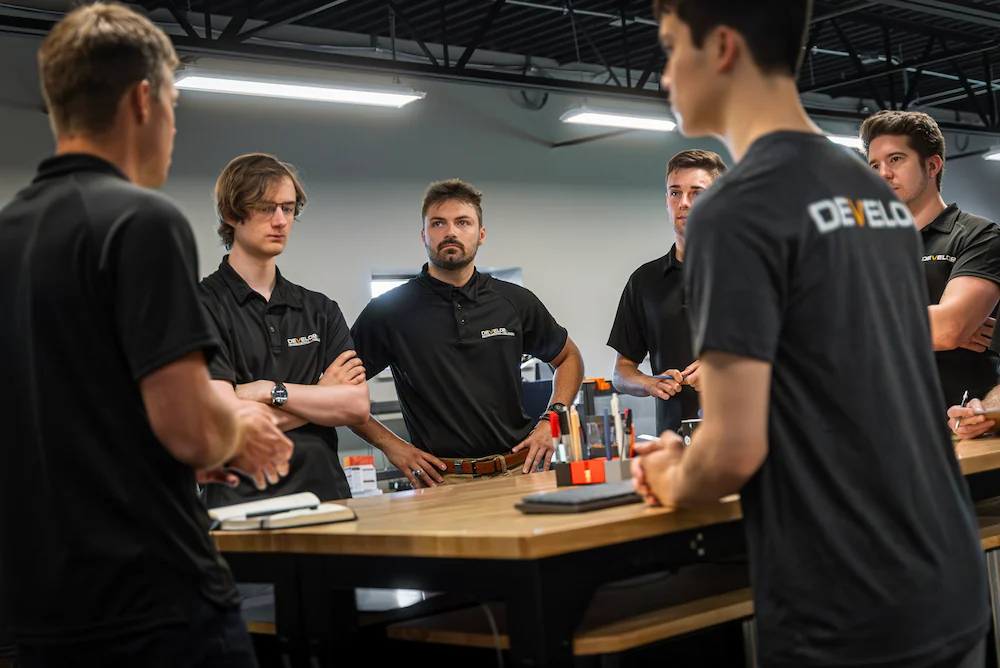
Implementing GAMP and automation in the life sciences industry presents unique challenges. Ensuring GAMP compliance in robotics and other automated systems can’t be an afterthought. Instead, it’s a fundamental requirement that impacts project planning, design, and budget. Life science manufacturers recognize that GAMP 5 guidelines carry other costs, and if GAMP isn’t a requirement, we’ll follow our standard ISO and internal A3 audit process.
DEVELOP’s engineers don’t just understand these challenges, we conquer them. Our team of specialists acts as an extension of your team, guiding you through the challenges of GAMP and automation. We ensure your systems are designed, implemented, and validated to not only meet but exceed the highest standards of quality and compliance. Here are just some of the challenges that we’re helping life science manufacturers to solve through our automation services.
Cost of Compliance
The truth is that implementing GAMP compliance can be a costly endeavor. Validation activities, documentation, and ongoing maintenance all require significant investment. But what if you could smooth the process and minimize those costs without compromising quality or compliance?
DEVELOP LLC can help you achieve exactly that. Our expertise in machine design and GAMP 5 enables us to develop innovative and cost-effective solutions that meet the stringent demands of regulated industries.
We also handle all aspects of your automation project in-house, from design and engineering to manufacturing and integration. That eliminates the need for costly third-party vendors, makes communication easier, and ensures straightforward project management.
By partnering with DEVELOP LLC, you can optimize your investment in automation and GAMP compliance, freeing up resources to focus on your core business objectives. Our expertise and experience ensures that your automated systems are not only compliant but also efficient, reliable, and cost-effective.
Data Integrity and Security
Protecting sensitive information isn’t just a regulatory requirement, it’s a matter of patient safety and public trust. This is where DEVELOP’s engineering expertise shines. We know that rugged security measures are essential to safeguard your critical systems and data.
Our engineering services prioritize data integrity and security through:
- Strict Access Controls: We design systems with granular access controls, using secure Human Machine Interfaces (HMIs) to ensure that only authorized personnel can access critical systems and data. Our custom and semi-custom HMIs provide a user-friendly interface while enforcing strict authentication protocols, preventing unauthorized access that could compromise data integrity.
- Secure Credential Management: Strong passwords, multi-factor authentication, and other security protocols protect against unauthorized access and safeguard your sensitive data.
- Data Encryption: Sensitive data is encrypted both in transit and at rest, safeguarding it from breaches and ensuring confidentiality.
- Detailed Audit Trails: All system activities are logged and time-stamped, providing a comprehensive audit trail for traceability and accountability. You can track changes, identify potential issues, and demonstrate compliance with regulatory requirements.
Integration with Legacy Systems
Whether you’re choosing your first automation project or replacing an old machine, integrating new robotic systems with existing legacy systems can be an undertaking. Legacy systems often have outdated technology, limited documentation, and compatibility challenges that can hinder integration efforts. This is particularly true for manufacturing systems, where precise control and integration with existing production lines are essential for achieving optimal performance and maintaining GAMP compliance.
DEVELOP LLC has extensive experience in integrating new systems with legacy environments. Our team of experts understands the complexities involved and can provide tailored solutions to ensure integration while maintaining compliance with GAMP guidelines.
Spot the Automation Opportunities in Your Factory
Stop letting bottlenecks, labor shortages, and missed opportunities hold you back.
Our free eBook, Automate to Elevate: Your Automation Assessment Guide, reveals the secrets to pinpointing high-ROI automation opportunities hiding in plain sight. Learn our proven DIY assessment process and start a more efficient, profitable future.
GAMP and Automation to Conquer Compliance, Unleash Potential
Implementing GAMP and automation in life sciences can feel like walking a tightrope. The regulations are stringent, the stakes are high, and the margin for error is razor-thin. But what if you had a partner to guide you, a team of experts who could transform those challenges into opportunities?
DEVELOP LLC is your GAMP partner, equipped with the knowledge and experience to access the full potential of automation in regulated environments. We offer a range of targeted services to ensure your systems not only meet but exceed compliance standards:
- Automation Systems Integration: We weave robotics and automation into your manufacturing processes, ensuring they align with GAMP 5 guidelines and amplify your production efficiency.
- Machine Design: Our engineers design machines with a strong emphasis on principles that support GAMP compliance, aiming to minimize validation challenges and maximize performance.
- Engineering Services: We’ve got you covered. Our expert engineers provide the guidance and support you need to confidently manage GAMP.
- Hardware Design: We don’t just design hardware, we design compliance. Our embedded hardware solutions, when combined with automation, are rigorously validated for use in regulated environments, ensuring reliability, security, and peace of mind.
Discover the Power of GAMP and Automation
GAMP is a springboard to propel your business forward. It’s an opportunity to enhance your manufacturing processes, improve product quality, and gain a competitive edge.
By embracing GAMP 5 guidelines and partnering with an experienced automation integrator like DEVELOP LLC, you can access a world of possibilities.
Picture a future where your manufacturing processes aren’t only compliant but also incredibly efficient, where your automated systems operate without friction. This is the power of GAMP and automation working together.
With DEVELOP LLC’s expertise in GAMP robotics, you can:
- Minimize Risks: Identify potential compliance issues early on, avoiding costly penalties and delays.
- Optimize Processes: Improve your workflows, reduce waste, and increase productivity through robust and reliable automated systems.
- Enhance Scalability: Adapt and scale your operations without compromising quality or compliance.
- Build Trust: Demonstrate your commitment to quality and patient safety, earning the trust of regulatory agencies, customers, and the public.
Ready to take the first step on your journey towards a compliant and efficient future?
Discover how DEVELOP LLC can help you achieve your business goals while exceeding regulatory expectations. Our team of experts is ready to answer your questions, provide personalized guidance, and help you access the full potential of automation in your manufacturing operations.
Supercharge your manufacturing with GAMP-compliant automation. Book your free consultation now!