

Modern manufacturing is about constant growth, keeping customers happy, building high-value products, and being tough enough to handle whatever the global market throws at us. To do that, we have to keep improving how we operate, moving beyond old ways to smarter, more integrated systems.
Global labor shortages and the need for better efficiency and consistency in production have made automated manufacturing fundamental. At the same time, product development remains a cornerstone of any successful business. It’s the disciplined way to take an idea and turn it into something ready for the market, from the first sketch to final testing and launch. So, both automation integration and product development are essential for manufacturers looking to thrive today.
In this article, we’ll examine how applying a product development mindset to your automation investments can help you achieve faster ROI, reduce risks, and build a more resilient, productive operation.
Understanding the Product Development Lifecycle

Every good product starts with a clear process, a roadmap for turning an idea into something real and ready for the market. That new product development lifecycle typically has a few key stages:
- Research and Ideation: This is where you figure out what people need. You identify market gaps and customer needs, generating innovative product ideas. Getting this upfront work right prevents headaches later on.
- Concept Development and Prototyping: Ideas become tangible here, as detailed designs are created and prototypes are built to test feasibility and usability. User feedback is crucial; products with early input see 50% higher market success. You use this to find flaws and confirm your assumptions.
- Product Testing and Validation: Products are rigorously tested before anything goes into full production. That means checking performance, safety, and quality standards are met. Automated testing is vital, especially for products with software, to save time and reduce risk.
- Market Testing: You first introduce the product to a small, controlled market segment to see how it performs in the real world. The goal is to refine the strategy before widespread scaling.
- Product Launch (Commercialization): The final stage is formal market introduction. Thorough research and testing ensure a well-executed launch and long-term success.
Critical Success Factors in Product Development
What makes this whole product development process actually work? A few things stand out:
First, a disciplined process is key. This means thorough upfront work, clear product definition, and Go/Kill decision points to prevent wasted resources. You also need a clear strategy for new products, outlining goals and focus areas.
Second, adequate human and financial resources are essential. Senior management must back projects with the necessary personnel and R&D funding.
Third, always start with a genuine customer need. That’s where profitable ideas begin. Use objective screening to validate concepts with target customers.
Fourth, iteration is key. Product development is a cycle of feedback and refinement. You constantly review designs, build models to test feasibility, and use prototyping to work out technical issues or add features customers really want.
Here at DEVELOP LLC, we see this all the time, letting designers rapidly dial in on their vision, shrinking the distance between an idea and a successful final product. This continuous feedback helps reduce risks, optimize designs, and ensure market fit. An iterative approach is just as vital for complex automation integration projects because initial assumptions almost always need real-world adjustment.
Finally, customer input is continuous, not just at the start. While market research begins the process, feedback from user acceptance testing or a select group evaluating the near-final product is crucial.
Understanding the Automation Integration Project Lifecycle

Like building a new product, tackling an automation integration project follows a structured path. Here at DEVELOP, we’ve got a clear lifecycle for it:
- Assessment and Planning: We start by really digging into your existing operations. This stage involves identifying bottlenecks and defining clear automation goals and needs. Nailing this early step is key to making the rest go smoothly. We offer an Automation Assessment to guide you through this step.
- Design and Engineering: Our engineers develop the technical blueprint and detailed design for the automation solution. It’s a collaborative engineering effort with iterations and reviews, translating your needs into a tangible machine design.
- Procurement and Assembly: We acquire components and build the machine in-house, coordinating with vendors to keep things on track.
- Factory Acceptance Testing (FAT) and Validation: We perform rigorous testing before the machine leaves our floor. You and your team are invited to review the system at our facility to validate its functionality, safety, and quality. This step de-risks the entire project and ensures the system is ready before it ships.
- Installation and Training: Finally, installation integrates the system into your production line. A crucial step here is operator training. We go beyond, training your team to maintain and program machines themselves, ensuring self-reliance and rapid fault recovery.
Key Considerations for Successful Automation Integration
To make sure an automation integration project really pays off, you need to keep a few things in mind throughout:
- Clear Needs and Requirements: You must know exactly what you want to achieve. Be specific with your suppliers and clearly lay out your requirements.
- Right-Sized Technology: Don’t overcomplicate it. Pick automation tools and components that fit your specific needs and budget, not just the latest fancy gadget.
- Strong Partnerships: Work with experienced automation experts. Clear communication and transparency with your chosen vendor are non-negotiable for project success.
- Focus on ROI: Calculate the potential return on your automation investments. Through smart capital allocation decisions, we often see ROI in less than two years for our projects.
- Phased Approach: Don’t try to automate everything at once. A gradual, stage-gate approach, starting with smaller pilot projects, helps spread out costs, minimizes disruption, validates your solutions, and builds internal expertise. It minimizes risk and builds confidence incrementally. It’s a bit like launching a Minimum Viable Product. You learn and build as you go.
- Risk Reduction: Identify potential issues early. Picking easy targets for your first automation project is a smart move.
- Comprehensive Documentation: Good documentation (drawings, schematics, software code) is vital for long-term maintenance and future upgrades.
- Workforce Adaptation: Automation means new skills for your team. Effective training programs are crucial, and getting employees involved from the start helps bridge any skills gaps and overcome resistance to change.
- Beyond the Machine: Remember, you’re not just buying a piece of equipment. An automation project delivers a complete, integrated system of hardware, software, user interfaces, integration into your existing lines, training, and ongoing support documentation. It’s not just installing a machine. Much like developing a complex product, a holistic view is essential for long-term value.
- Iterative Implementation: A phased approach lets you validate concepts early, learn continuously, and see a rapid return on your investment. An incremental demonstration of value significantly increases the chances of project success and broader organizational adoption.
Why Automation Is Like Product Development
The more you look, the more striking the similarities are between automation integration and product development. Thinking about automation through that product development lifecycle lens can give manufacturers a real strategic edge.
Unlike traditional product development, machine building demands zero ambiguity at the finish line. Specs can’t be fuzzy, and performance targets must be hit. That’s why we double down on process — in automation, margin for error is measured in downtime and dollars.
Product Development vs. Automation Integration Lifecycle with Customer Engagement
Both product development and automation integration follow remarkably similar stages, ensuring a disciplined approach from start to finish.
| Stage | Product Development Lifecycle | Automation Integration Lifecycle (DEVELOP) | Customer Engagement at DEVELOP |
|---|---|---|---|
| 1. Discovery / Assessment | Identify market gaps, conduct user research, and define target needs. | Evaluate factory performance via Automation Assessment; identify automation opportunities. | Collaborative site visits, process walk-throughs, and early stakeholder interviews. |
| 2. Concept & Design | Develop early concepts, validate with focus groups or expert panels. | Engineer automation solutions using DFA principles and iterative designs. | Client design reviews, concept walkthroughs, operator feedback on UI, and machine access. |
| 3. POC & Risk Reduction | Prototype key features to de-risk product direction before full build. | Build Proof of Concept (POC) for high-risk machine subsystems to validate feasibility before committing to the full scope. | Co-develop and test POC functionality; gather operator feedback and refine subsystem performance. |
| 4. FAT (Validation Testing) | Conduct structured alpha or beta testing before full-scale launch. | Perform Factory Acceptance Testing (FAT) at DEVELOP to validate system functionality, safety, and quality before shipping. | Clients attend FAT to review real performance, make final changes, and sign off on readiness. |
| 5. Launch & Training | Official market release with customer training and documentation. | Install and commission the system on-site; conduct Site Acceptance Testing (SAT) to confirm full integration and readiness. | Operators participate in SAT, receive full training, and access structured documentation. |
| 6. Optimization & Scale | Iterate using customer data, feedback, and analytics to improve future models. | Optimize automation using Smart HMI insights, service data, and feedback loops for long-term performance improvements. | Quarterly reviews, performance audits, and scalable enhancements based on user/operator feedback. |
Common Hurdles We Face
We face similar hurdles in both areas:
- High Initial Investment: Whether it’s R&D for a new product or machinery for automation integration, both demand significant upfront capital.
- Complex Integration: Fitting a new product into an existing market or new automation into legacy factory systems is technically complex and can cause disruptions.
- Workforce Adaptation and Skills Gap: New products and new automation require new skills from the workforce. Resistance to change from employees is a common barrier.
- Inherent Risk: There’s always risk, from product market failure to technical malfunctions in automation. Both demand in-depth planning to avoid these risks.
The Payoffs Are Clear
Despite the challenges, the payoffs are substantial and often overlap:
- Increased Efficiency and Productivity: A core benefit for both, leading to faster production and higher throughput.
- Better Product Quality and Consistency: Automation significantly reduces human error, and Design for Automation (DFA) principles ensure products are built for consistent, error-proof manufacturing.
- Significant Cost Savings: Both lead to lower labor costs, less waste, and reduced operational expenses.
- Faster Time-to-Market: DFA principles cut cycle times, and automation integration streamlines production processes. Getting products to customers faster is always a key objective.
- Scalability: Solutions in both domains must grow with the business and evolving demand.
Crucially, product development and automation investments involve critical Go/Kill decision points, constantly evaluating if the project makes sense against changing conditions and financial targets. Applying a stage-gate approach, common in product development lifecycle management, significantly boosts success rates for automation integration by ensuring strategic alignment and preventing wasted resources.
Now, while traditional product development focuses on external customers, the “customer” for automation integration is primarily your own manufacturing operation and its people. The benefits all serve internal goals. Getting user adoption from the CEO to the machine tender and encouraging company-wide enthusiasm are paramount.
Think of it as achieving product-market fit, but for an internal market. Understanding the needs of your factory operators, maintenance teams, and production managers is just as vital as understanding external customer needs for a new product. Both demand a strong focus on change management and clear internal communication.
Design for Automation Principles as Foundation for Success
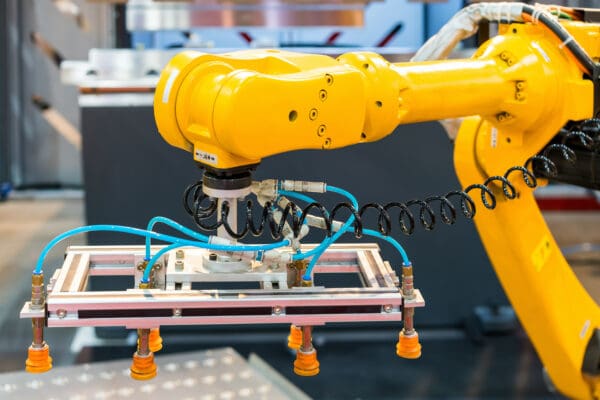
When we talk about automated manufacturing, there’s a principle called Design for Automation, or DFA. At DEVELOP, DFA is a mindset forged through years of manufacturing experience. From optics to automotive, we’ve learned that products only scale when design and production are tightly aligned. DFA ensures our machines are built for uptime, maintainability, and real-world conditions right from the first sketch. Don’t think about this in terms of making individual parts. It’s more about how those parts fit together efficiently. DFA cuts down on complexity, smooths out workflows, and reduces waste.
What DFA Principles Really Mean
So, what does that look like in practice on your factory floor?
- Fewer Parts: This is huge. Fewer parts mean simpler assembly, which cuts down on material, inventory, and labor costs. Think one plastic cap instead of two pieces.
- Standard Components: Using common parts across different products simplifies inventory and tools.
- Designed for Machines: Make parts symmetrical, self-locating, or easy for robots to handle. Part consistency is vital for accurate machine placement.
- Easy Handling: Parts shouldn’t need fussy orientation. If a machine can grab it any way, that saves time.
- Less Fasteners: Snap-fits or adhesives can often replace screws and bolts, which take extra steps and tools.
- Mistake-Proofing (Poka-Yoke): Design the parts and the process so errors are hard to make or easy to spot.
A core principle behind all of this is a clear decision on variable management. While automation can be built to handle many variances, doing so drastically increases the cost. The key is to decide upfront why you are automating and whether the value of handling that variability outweighs the additional cost.
How DFA Boosts Automation Success
DFA plays a pivotal role in optimizing product design and the actual automation integration. It forces crucial collaborative engineering between design and manufacturing teams from the very beginning.
DFA and Design for Manufacturing (DFM) aim to simplify and standardize. This means products are inherently easier to build, reducing labor, tooling, and material costs. They also reduce errors by ensuring parts are consistent and assembly is intuitive.
The bottom line is that DFA cuts cycle times, minimizes assembly errors, and lowers costs, which means a faster time-to-market and greater scalability. Skipping automation in the design phase is a costly mistake we see all too often.
Our Approach to Automation Integration at DEVELOP LLC
At DEVELOP, we approach automation integration with a clear vision, centered on getting you a real return on your automation investments. We prioritize smart planning, step-by-step implementation, and ensuring our clients are set up for long-term success.
Focus on ROI and Smart Choices (The 80/20 Rule)
We push for a swift return on investment in every project. The key is applying the 80/20 rule: focus your automation investments on the 20% of your products or processes that generate 80% of your profits or cause the most significant bottlenecks.
Automating low-volume tasks or things that often won’t significantly impact labor or growth isn’t worth it. Adding complexity or more unique functions to an automation machine doesn’t just add cost; it multiplies it. Automation capital is a significant resource, so every dollar needs to be invested strategically to maximize impact. We guide clients to target areas that yield the biggest gains.
Our Stage-Gate Advantage
At DEVELOP, we tackle every automation integration project using a disciplined Stage-Gate process adapted from innovation expert Dr. Robert Cooper. This process breaks complex projects into structured phases, each with clear Go/Kill checkpoints. It ensures that every automation investment only moves forward when it’s truly proven to add value.
Just like in top-tier product development, ongoing customer feedback is essential. That’s why we have formal processes and an open-door policy, keeping your team involved from concept to completion. We co-develop solutions in real-time with your stakeholders, ensuring everything aligns with your operational realities. Our approach, paired with strategic tools like the Lean Business Model Canvas, de-risks projects and makes innovation measurable and predictable.
Partnership and Assessment
Our process starts with a comprehensive Automation Assessment to pinpoint the best opportunities. We’re deeply committed to educating our clients, far beyond what others do. We train your teams to maintain and even program their machines, so they can handle rapid fault recovery and become self-reliant. This helps address the common skills gap and ensures the long-term ROI of your automation investments. Effective, transparent partnerships are crucial for success.
Vertical Integration and Agile Design
We’ve brought a lot of technology in-house, embracing vertical integration. This means we’re a single source for mechanical, electrical, software, and firmware engineering, as well as in-house assembly and manufacturing. That gives us total control from concept to completion. This kind of agile manufacturing makes the design process more responsive, less prone to costly late-stage changes, and directly boosts the efficiency of subsequent automation integration.
From the Founder’s Desk: Why Automation is Personal
My background is rooted in product development. I pursued a Master’s in New Product Management, where I learned to treat product portfolios like investment portfolios, each requiring discipline, ROI analysis, and strategic timing.
My early military and consumer optics work, followed by hands-on engineering at Ring Brothers, taught me the value of vertical integration and fast iteration. We were manufacturing in-house to hit tight deadlines and deliver quality without compromise.
DEVELOP was born from that DNA. I built a team that blends rapid product iteration with real manufacturing discipline. Our passion isn’t just automation; it’s developing solutions that perform with precision, meet uptime targets, and make a measurable difference for our clients. This is product development at its most tangible.
Your Next Steps in Smart Automation
Integrating automation is strikingly similar to launching a new product. By applying disciplined thinking to the product development lifecycle to your automation integration projects, manufacturers gain serious advantages. We’re talking about significantly enhanced efficiency, consistently superior product quality, and achieving a faster time-to-market.
Principles like DFA become vital here for true collaborative engineering from the initial design phase, ensuring your products are conceived and built for efficient automated manufacturing.
It’s all about making smart automation investments, targeting the right opportunities with a phased, stage-gate approach that minimizes risk and accelerates your ROI, ultimately leading to a far more agile manufacturing operation.
Ready to pinpoint where automation can deliver the biggest gains for your business?
Uncover your specific needs and ideal automation targets by taking our complimentary, tailored Automation Assessment Questionnaire, a quick survey designed to set the stage for your personalized solutions.
Or perhaps you’re keen to truly master your manufacturing future with deeper insights? Grab your copy of our eBook, Automate to Elevate: Your Automation Assessment Guide, which reveals the secrets of effective automation, offering DIY assessment processes and DEVELOP’s proven methodologies to transform your operations.
Alternatively, if you’re ready to dig into the specifics of your project, why not book a free consultation? Our engineering specialists, manufacturing experts, and dedicated automation integration project managers are eager to answer your questions and explore tailored solutions.
The future of your factory floor starts with action.
Request YourFree Expert Consultation
Our project managers, automation specialists, and machining experts specialize in translating practical manufacturing targets into cost effective automated solutions. Schedule a meeting today to plan your swift return on investment.