
By Matt Moseman, CEO of DEVELOP LLC
Why Automating Production Is Harder Than It Looks
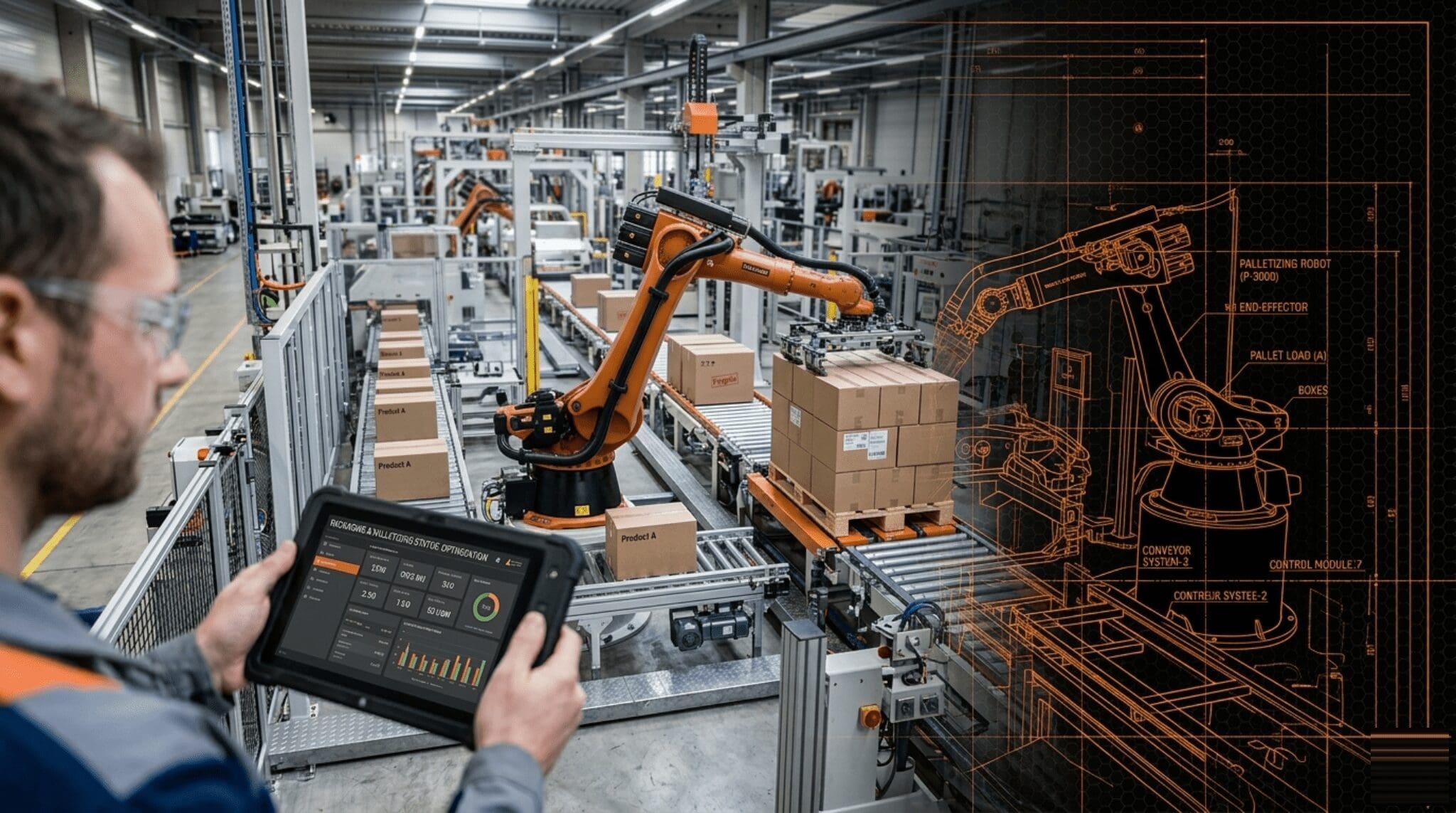
Across manufacturing, the pressure to automate is growing. Skilled labor is harder to hire while production expectations continue to rise. Many manufacturers are investing in robotics, automated assembly equipment, packaging automation, and machine vision to keep their operations competitive.
The technology itself usually works exactly as intended. The difficulty is how automation interacts with the rest of the factory.
Production lines behave as connected systems. Material flow, machine cycle times, operator interaction, and product variation all influence how work moves through the plant. When automation is introduced without understanding those relationships, the result is often a shift in where the constraint appears rather than a meaningful increase in output.
This pattern shows up in factories that begin automating manufacturing processes one project at a time. A robot cell is installed to support a single operation, or a palletizer is added to help the packaging team keep pace. In other cases, legacy systems are upgraded to increase output in a particular station. The individual projects work, but the overall production system often changes very little.
Factories that succeed with automation tend to have clear ownership of how automation decisions are made. That responsibility often starts with a single point of direction, but it is carried out by a team applying system-level thinking across the operation.
In practice, this means identifying where automation will produce measurable gains and where it will simply move problems around the line. It involves evaluating constraints, understanding product variation, and deciding how industrial automation projects should be sequenced over time.
At DEVELOP, that direction is paired with a team of engineers who work through the details. The role is to find the signal in the noise, then apply engineering depth where it matters.
In one recent automation assessment, the initial focus was improving efficiency by designing the product for automation. During the assessment, the team identified an opportunity to reduce annual consumable costs by a significant margin while also simplifying how the product could be automated. The result was a lower cost to automate, improved margins, and a more stable production approach.
That perspective is described as the Chief Automation Officer mindset.
The focus of that role is straightforward. Automation decisions are ultimately driven by how they improve margins and long-term business value. Throughput and stability are how that value appears on the factory floor. When automation decisions are tied back to those outcomes, the production system improves in a way that actually supports growth. Robotics integration, machine design, and process automation are treated as parts of a single operational structure rather than isolated upgrades.
Manufacturers that approach automation in this way usually develop systems that evolve alongside their production requirements. Without that level of oversight, automation investments often solve one issue while exposing another somewhere else in the process.
Understanding the Chief Automation Officer mindset provides a practical starting point for manufacturers who want to automate production in a way that strengthens the entire business.
What Is a Chief Automation Officer?
A Chief Automation Officer (CAO) is responsible for the automation strategy of a manufacturing operation. The role focuses on how automation affects the performance of the entire production system, rather than overseeing individual machines or isolated automation projects.
In many factories, automation decisions begin as engineering projects. A team identifies a labor issue, installs a robot cell, or upgrades a specific machine. Those projects can work well on their own, but without coordination they can introduce new constraints elsewhere in the line. The CAO perspective exists to prevent that from happening.
The responsibility of a Chief Automation Officer is to connect engineering reality with business objectives.
That means understanding what’s possible with current materials, available technology, and the practical limits of time and capital. Automation decisions are made in the context of how the production system actually runs, including material flow, operator interaction, and product variation.
At the same time, those decisions are guided by long-term business goals. The focus is not just on improving throughput or stability in isolation, but on how automation can expand margins, increase production capacity, and strengthen the overall position of the business.
When those two perspectives come together, automation stops being a series of projects and becomes a structured way to grow the factory.
Typical responsibilities follow a clear order of thinking.
Before looking at automation itself, a Chief Automation Officer needs to understand where the business is going and what constraints define the system.
That starts with:
- Understanding the direction of the business and where growth is expected
- Identifying what variables can be changed within current processes and product design
- Defining the available budget and how capital will be allocated
Once those constraints are clear, automation decisions become practical. At that point, responsibilities include:
- Identifying realistic automation opportunities within existing production processes
- Sequencing industrial automation projects so each one strengthens the overall system
- Evaluating return on investment and expected production impact before capital is committed
- Ensuring robotics integration fits within the current manufacturing environment
- Preventing automation decisions that shift bottlenecks rather than improving output
The role sits between strategy and production engineering. A Chief Automation Officer needs to understand how factories and businesses actually run, how automation technologies behave in real production environments, and how capital investment decisions affect the business over time.
In practice, the CAO perspective combines multiple capabilities:
- Strategic planning for long-term automation development
- Technical understanding of robotics and manufacturing systems
- Practical experience diagnosing production problems on the factory floor
Some organizations formally assign this responsibility to a dedicated leader. In others, the mindset develops within experienced engineering or operations teams who have seen how automation projects influence the broader production system.
Regardless of the title used internally, the function remains the same: ensuring automation investments improve the factory as a whole rather than solving one problem while creating another.
Scaling to 4.5M Units with a CAO Mindset
When Elec-Tron needed to reshore production and replace aging equipment, they didn't just buy a machine, they used a structured assessment to map technical risk against business growth.
| 2x Legacy Machines Replaced |
2-Year Full investment ROI |
Why Most Factories Don’t Have a Chief Automation Officer
Most manufacturing companies do not formally have a Chief Automation Officer. Automation decisions still get made, but responsibility is often spread across multiple roles inside the organization.
A common pattern is to give a manufacturing engineer a budget and a specific problem to solve. That approach can improve a single process, but it rarely improves the system. In many cases, it just moves the bottleneck somewhere else.
A systems-level approach requires a different mindset. Automation decisions are made based on how production, product design, and material flow interact across the entire operation.
This is where the Chief Automation Officer mindset matters. It shifts automation from isolated fixes to coordinated system improvement. Manufacturers that take this approach tend to build for growth. Others remain focused on solving the next problem in front of them.
Operations leadership also drives many automation decisions. Their priority is maintaining production output and reducing disruption on the floor. When labor shortages or throughput constraints appear, automation can become an attractive solution.
Without a CAO mindset, automation is often used as a ‘band-aid’ for a missing person, which creates a single point of failure in the production line. If the system isn’t designed for long-term stability, you’ve simply traded a staffing headache for a technical one.
Vendors and integrators bring valuable expertise, but many automation projects start with the wrong premise. Teams are often asked to deliver a predefined solution. The result is a system that works as specified, but does not improve overall production.
The Automation Assessment process shifts that thinking. It focuses on the system first, then defines where automation should be applied.
Many factories rely on outside partners, including an industrial automation consultant, to help evaluate automation opportunities and recommend solutions.
Engineering understands the technical requirements of the process. Operations understands the realities of running production every day. Automation vendors and industrial automation consultants bring experience from many different factories and industries.
The challenge is that none of these groups are typically responsible for how automation projects interact across the factory over time. In practice, automation decisions often happen independently across the business:
- Engineering teams upgrade a machine to resolve a technical limitation in a specific process.
- Operations leadership approves an automation project to relieve pressure at a constrained station.
- Equipment vendors or integrators design and install a robot cell that performs exactly as specified.
What the CAO Mindset Actually Changes
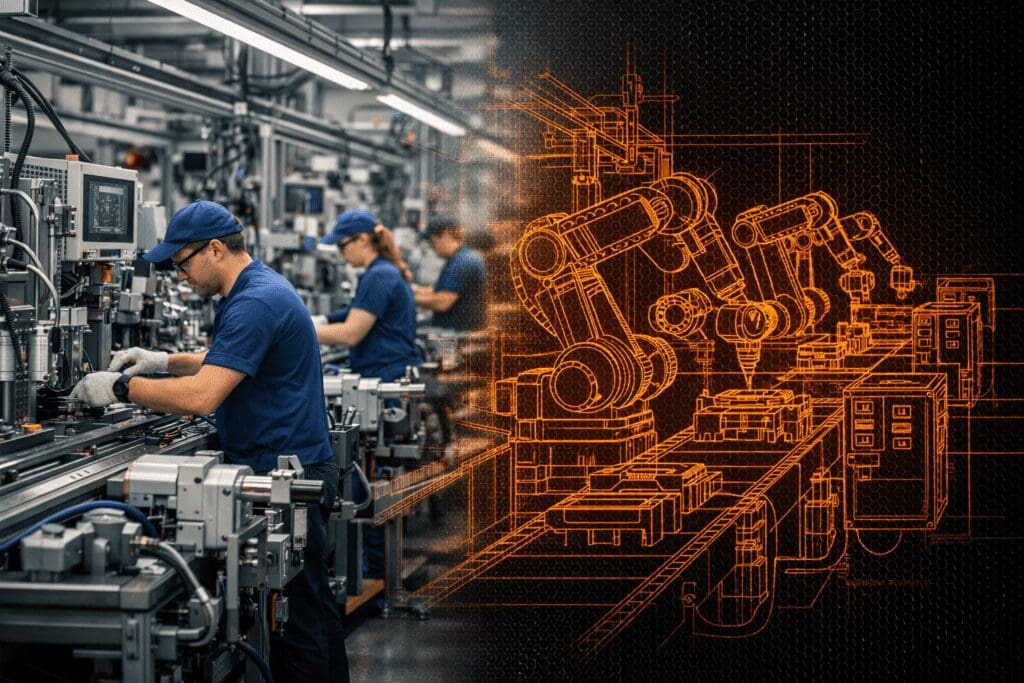
The Chief Automation Officer mindset changes how automation decisions are evaluated inside the factory.
Instead of starting with a piece of equipment or a specific technology, the starting point becomes the production system itself. The question is not simply whether a robot, machine, or software system will work, but how that decision will influence the performance of the entire business.
This shift has practical consequences when manufacturers begin automating manufacturing processes.
Automation decisions are not made in isolation. They follow from a clear understanding of the business, the process, and the available budget.
Once those constraints are defined, automation is evaluated based on how it affects the system.
System Impact
Automation should improve how work moves through the production system. That includes throughput, product quality, and material flow between stations. If one step speeds up but creates accumulation elsewhere, the system has not improved.
Project Sequencing
Most factories have multiple automation opportunities. The challenge is deciding what to do first. Projects should be sequenced so each one strengthens the system and supports the next stage of both automation and business growth.
Operational Stability
Automation should make production more stable. Equipment that works in isolation can still introduce variability if it is not aligned with the rest of the process. Performance under real production conditions matters more than isolated test results.
Long-Term Structure
Automation decisions shape how the factory operates and grows. Systems should support future expansion rather than limit it. Equipment, controls, and robotics integration need to fit into a broader production architecture.
When automation is evaluated this way, the focus shifts from individual machines to overall production capability. Projects become part of a longer-term plan rather than a series of disconnected upgrades.
The Four Levers Every Automation Strategy Must Improve
When manufacturers begin automating production, the conversation often starts with technology. Robots, vision systems, conveyors, and new machines all enter the discussion quickly.
The problem is that technology alone does not define whether an automation project improves the factory.
A useful way to evaluate the automation of a manufacturing process is to focus on the operational outcome that the project delivers.

Labor
Many automation projects begin with labor pressure. Repetitive work, difficult ergonomics, and staffing shortages can limit production long before equipment capacity is reached.
Automation can remove physically demanding or highly repetitive tasks while allowing skilled operators to focus on higher-value work. When applied correctly, automation improves workforce utilization rather than simply replacing labor.

Quality
Production consistency is another area where automation can have a measurable impact.
Manual processes often introduce variation, especially in high-volume environments. Robotics, vision inspection, and automated handling systems can reduce that variation and make product quality more predictable. Improvements in quality often lead to lower scrap rates and fewer downstream issues.

Flow
In many factories, the largest gains from automation come from improving how work moves through the production system.
Material accumulation, uneven cycle times, and poorly synchronized processes can slow production even when individual machines are capable of running faster. Automation that improves flow focuses on removing bottlenecks and stabilizing the movement of product through the line.
Related Reading: From Bottlenecks to Breakthroughs: How Flexible Manufacturing Systems Deliver ROI

Growth
Some automation projects are driven by the need for additional capacity.
Automation can increase output without requiring additional floor space or major facility expansion. When the production system is designed carefully, automation allows manufacturers to scale production while maintaining control over quality and operating costs.
Related Reading: Automation in Mid-Sized Factories: How to Scale Effectively
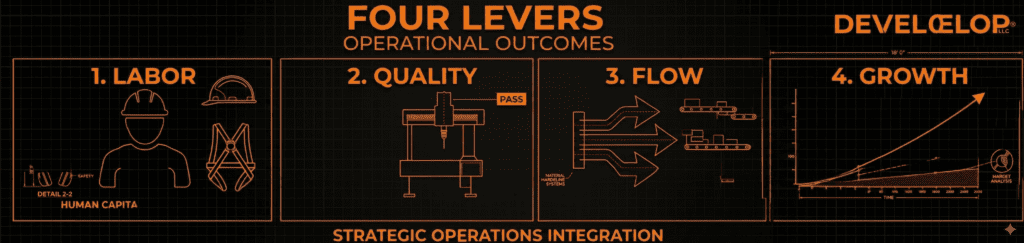
These four levers provide a practical framework for evaluating automation decisions. If an automation project does not clearly improve labor utilization, product quality, production flow, or growth capacity, the investment deserves closer examination before moving forward.
Is your facility ready for the next lever?
Automation only scales when the foundation is stable. Use our DIY Automation Assessment Questionnaire to identify where hidden bottlenecks are currently limiting your throughput before you commit capital to new robotics.
Why Robotics Alone Doesn’t Fix Production Problems
Robots are often the first technology manufacturers consider when looking to automate production. Robotic systems are reliable, repeatable, and capable of running at high cycle rates.
However, robotics integration alone does not guarantee higher production output.
Robots perform exactly as they’re programmed. They follow defined motion paths, execute tasks with consistent timing, and expect the surrounding process to behave predictably. When the production environment is stable, robotic systems can operate extremely well.
In many factories, the surrounding system is not as stable as it appears.
When robots are introduced into an existing production line, they often expose underlying problems that were previously absorbed by manual processes. Human operators naturally compensate for variation in ways that automated systems cannot.
Common issues revealed during robotics integration include:
- Upstream process variation that changes how parts arrive at the robot
- Material handling inconsistencies that disrupt the timing of the operation
- Product variation that affects how parts must be gripped, oriented, or assembled
- Process instability that causes intermittent interruptions in production flow
None of these problems are caused by the robot itself. The robot simply performs its programmed task and stops when the conditions required for that task are not met.
This is one reason many industrial automation projects begin with a deeper evaluation of the surrounding production process. Understanding how parts move through the line, where variation occurs, and how operators currently compensate for those issues can make the difference between a successful automation project and one that struggles to maintain consistent output.
Robotics integration works best when it is implemented as part of a broader automation strategy rather than as a standalone technology upgrade.
Project 1701: Engineering the Physics of High-Speed Packing
A standalone robot can't fix an unstable upstream process. For Project 1701, DEVELOP engineered a coordinated $1M+ automation platform that stabilized high-speed product flow and eliminated a manual packing bottleneck.
| 4.5 Seconds In-feed product rate |
<4 Minutes Total SKU changeover |
100% Labor dependency eliminated |
The Role of an Industrial Automation Consultant
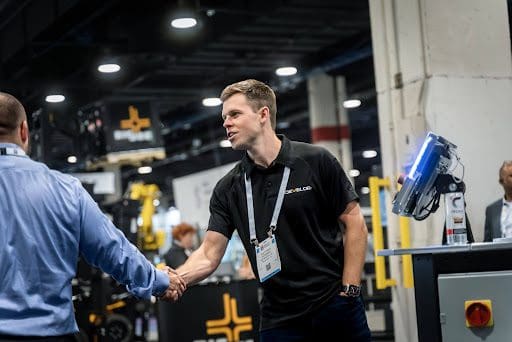
Many manufacturers do not have someone internally responsible for a long-term automation strategy. Engineering teams are focused on solving immediate technical problems, and operations leaders are focused on keeping production running.
Automation decisions end up happening under those pressures. Even when the responsibility is assigned, teams are rarely given the space to execute. It becomes another task added to an already full workload.
A systems-level automation approach does not develop that way. It takes time, investment, and sustained focus to build.
Without that commitment, automation stays reactive and rarely improves the system as a whole.
This is where an industrial automation consultant can provide value.
An experienced automation partner brings an outside perspective that’s difficult to develop internally while running a factory. Instead of focusing on a single machine or project, the consultant evaluates how automation can influence the performance of the entire production system.
In practice, this role mirrors the Chief Automation Officer mindset.
A manufacturing automation consultant typically begins by understanding how the production process actually operates today. That means observing production flow, identifying constraints, and documenting how material moves through the system.
From there, the consultant can help manufacturers:
- Evaluate automation readiness across the production line
- Map production constraints and sources of variation
- Identify realistic automation opportunities that support throughput and stability
- Sequence automation investments so each project strengthens the system
This process forms the foundation of an automation assessment.
Rather than starting with equipment recommendations, the goal is to understand where automation will deliver measurable operational improvements. Once that foundation exists, manufacturers can move forward with industrial automation projects that align with how the factory actually operates.
Related Reading: Industrial Robotics in Manufacturing: Your Guide to Optimizing Every Process
When Manufacturers Adopt the CAO Mindset
Most manufacturers do not start with a formal automation strategy. The Chief Automation Officer mindset usually develops after a factory has already invested in several rounds of automation and the results have been mixed.
In many cases, the technology works exactly as intended. The difficulty is that the production system does not improve in the way leadership expected.
Factories often begin thinking about automation at the system level when certain patterns appear in the operation.
Common signals include:
- Automation projects failing to deliver the expected return on investment
- Bottlenecks shifting from one part of the production line to another
- Automation vendors proposing different solutions for the same problem
- Leadership struggling to justify additional capital investment
- Production demand increasing faster than the available labor capacity
These situations are common in factories automating without a clear sequence or structure.
When these patterns appear, the underlying issue is often strategic rather than technical. The factory may already have capable equipment, experienced operators, and access to strong automation technology. What’s missing is a clear framework for deciding where automation should be applied and how projects should build on one another.
The CAO mindset begins to emerge when manufacturers step back and evaluate automation decisions according to their impact on the entire production system.
Instead of asking whether a specific machine or robot will work, the focus shifts toward how automation will influence throughput, stability, and the long-term development of the factory.
How Automation Strategy Drives Long-Term Manufacturing Competitiveness
Manufacturers operating in global markets face constant pressure to improve performance. Customers expect faster delivery, consistent product quality, and competitive pricing, even as production requirements become more complex.
Competing globally requires consistent output, predictable quality, and control over costs.
Automation plays an important role in supporting these goals. Many manufacturers are already automating production in some form, whether through industrial robotics integration, automated material handling, or machine upgrades.
The long-term advantage appears when the automation of a manufacturing process is approached strategically rather than project by project.
Automation investments influence the structure of the factory for years. Equipment layout, process flow, and control systems all shape how future production improvements can be implemented. When automation decisions are made without coordination, those systems can begin to compete with one another for space, resources, and production timing.
The CAO mindset addresses this by ensuring automation investments build on one another over time.
Each project is evaluated according to how it strengthens the production system, supports future automation opportunities, and improves the factory’s ability to compete. Instead of isolated upgrades, automation becomes part of a longer-term operational architecture that supports sustained manufacturing performance.
Automation Needs Ownership
Automation equipment alone does not improve factories. Robots, conveyors, machine vision systems, and automated assembly equipment are tools. Their impact depends on how they’re planned, integrated, and sequenced within the production system.
Most manufacturers already have access to capable robots, strong integrators, and a wide range of industrial automation equipment. The real challenge is deciding where automation should be applied and in what order.
Without that structure, automation projects tend to solve local problems while leaving the larger production system unchanged. Bottlenecks shift, equipment competes for space and timing, and capital is invested without delivering the improvement that leadership expected.
The Chief Automation Officer mindset addresses that gap by introducing ownership of the automation strategy. Automation decisions are evaluated according to how they influence throughput, stability, product quality, and long-term manufacturing capability.
Many manufacturers do not yet have that role internally. This is where a structured automation assessment becomes valuable.
At DEVELOP, automation assessments are designed to give manufacturers a clear view of how their production system behaves today and where automation will create measurable gains. The process focuses on observing the factory floor, identifying production constraints, and mapping realistic automation opportunities.
Depending on where a team is in its automation journey, DEVELOP offers three ways to begin that process:
DIY Automation Assessment
For teams exploring automation readiness and identifying where opportunities may exist across their operation.
Automation Roadmap
A structured, CapEx-ready assessment that defines automation opportunities, sequencing, and expected operational impact.
Automation Partnership
Ongoing engineering support where DEVELOP works alongside your team to plan and execute automation improvements across the factory.
Each model exists for a different stage of automation maturity. Some manufacturers need early clarity about whether automation makes sense. Others need a detailed roadmap that leadership can confidently invest behind. Some organizations are ready to build but require an experienced automation partner to carry delivery responsibility.
What matters is that automation begins with a clear understanding of the production system.
For manufacturers planning to automate production in the coming years, establishing that level of clarity is often the most valuable first step.
Automation changes what a factory is capable of. The question is whether those changes happen deliberately or one project at a time.
Manufacturers that take a system-level approach tend to see automation investments compound. Each improvement strengthens the next stage of the production system instead of forcing the team to revisit earlier decisions.
If your team is exploring automation and wants a clear view of where the real opportunities exist, the first step is a conversation.
Ready to start your own strategy?
Download our free eBook, Automate to Elevate: Your Automation Assessment Guide, for a step-by-step framework on identifying your best opportunities.